Summer Learning Loss Is Real — 5 Things You Can Do Right Now Before June Begins

summer learning

Summer holidays in India last five to six weeks, but that’s enough time for academic regression. Learn what summer learning loss is, why it happens during a short break, and four simple strategies you can begin before June to prevent it: daily reading, casual maths in everyday life, active learning to replace passive screen time, and low-pressure writing practice. This guide explains how to make each easily doable for busy families.

Every year, in the first week of July, teachers across India notice the same pattern. Children who left school in late May, confident and capable, return hesitating over spellings they knew, slower through a reading passage, uncertain about concepts they’d mastered. Within days of the new term, a gap becomes visible between children who stayed cognitively active over the break and those who didn’t — and it shows up in every subject, every class, every school.

Table of Contents

    Research shows that cognitive regression begins within two to three weeks of disengagement, which means a five to six-week summer break is more than enough time for meaningful academic slide. The good news is that it is almost entirely preventable — not through revision schedules or holiday homework, but through a small number of consistent daily habits that feel nothing like school work.

    ​For many parents, finding ways to keep kids actively engaged indoors during intense heat waves is genuinely challenging. It is easy to feel limited by space, boredom, and the pull of screens when outdoor play is off the table. If this sounds familiar, you are not alone—most families find this stretch of the calendar particularly tough. Acknowledging these challenges makes it all the more important to lean on simple, low-pressure strategies that work within a household setting.

    What Summer Learning Loss Looks Like

    Skills that need daily practice—reading fluency, arithmetic recall, and written expression—weaken after two or three weeks of disuse. In summer, children often lose weeks of progress, especially where repetition matters most.

    2–3
    weeks until cognitive regression visibly begins

    5–6
    weeks of summer break — enough for a real slide

    20 min
    Daily reading is needed to prevent vocabulary loss entirely.

    July
    When the gap becomes visible in classrooms across India

    Highest risk

    • Reading fluency
      Reading speed, accuracy, and vocabulary all drop quickly without daily reading. After five weeks without books, kids read more slowly and use simpler words.

    High risk

    • Maths recall
      Times tables, mental arithmetic, and calculation speed fade with disuse. The maths is there—the retrieval speed fades.

    Moderate risk

    • Written expression
      Sentence construction, spelling, and vocabulary in writing all regress. Without practice, kids write shorter, simpler sentences after five weeks.

    A child who reads for twenty minutes every day across the summer holiday will encounter hundreds of thousands of words — building vocabulary, fluency, and comprehension. A child who reads nothing at all will arrive in July measurably behind where they left in May. That gap widens with every passing year.

    Why the Two Most Common Parent Responses Don’t Work

    When parents think about summer learning loss, they tend to reach for one of two responses, and both are less effective than they appear. 

    1. The first is school-style holiday homework: revision packets, practice papers, and chapter summaries that children treat as obligations to be completed as quickly as possible, usually in the first week or the night before school reopens. 
    2. The second is complete relaxation: screens, late nights, and total academic shutdown on the grounds that children have “earned a break.” 

    Both extremes produce the same result in July: a child who is either resentful of learning or cognitively out of practice. The research on preventing summer slide consistently points to a third approach: small, daily, low-pressure cognitive habits that feel like life rather than school. The critical variable is not intensity — it is consistency. Fifteen minutes of reading every single day across five weeks produces far greater learning retention than two hours of reading on five separate days. Distribution matters more than duration, and enjoyment matters more than rigour.

    What doesn’t work

    • Holiday homework completed in one rushed sitting.
    • Practice papers and revision packets
    • Complete academic shutdown for five weeks
    • Last-minute cramming the week before July
    • Waiting until June to establish any habits

    What actually works

    • 15–20 min daily child-led reading
    • Casual maths woven into daily life
    • Learning disguised as games and real-life activities
    • Habits started before school closed in May.
    • Consistency every day, not intensity on some days

    Which summer challenge is hardest in your home?

    ?
    Too much screen time
    Kids refusing books
    Maintaining routines
    Finding educational activities

    Strategy 1: Make Daily Reading Non-Negotiable, but Entirely Child-Led

    Reading is the most powerful way to prevent summer learning loss. Children who read during holidays continue to grow their vocabulary and reading fluency and return to class confident in their comprehension. Reading fluency declines fastest during the summer, so this habit keeps kids strong—at zero cost and with minimal effort.

    Child-led reading is key. Kids who choose their own reading survive summer learning loss. Assigned texts and graded readers feel like work, so kids avoid them. Let children pick comic books, Champak, Tinkle, Amar Chitra Katha, mysteries, or books about topics they love. All count. For affordable access to books, check local libraries, organise book swaps with friends and neighbours, or use the growing number of free online story sites. Many municipal libraries offer free memberships for children, and some schools open their libraries to students over the holidays. If libraries are unavailable, swapping books with classmates or family members can add variety at no cost. Websites like StoryWeaver and Pratham Books also provide free stories in many Indian languages that can be read online or downloaded. 

    Make reading a fixed part of each day. Choose bedtime or another reliable slot. Visit a library or book fair—let kids select books they want. Read for twenty minutes each night to prevent reading regression all summer.

    1. Let them choose
      Tinkle, comics, fiction, non-fiction — any book they pick themselves beats the right book they resent
    2. Library or book fair
      One trip before schools close creates a stock of self-chosen books that lasts the holiday.
    3. Reading log
      A simple chart of books read — with small rewards at milestones — keeps motivation alive for five weeks.
    4. Read alongside them
      Children in households where adults read are significantly more likely to read themselves consistently.

    A Book Worth Having:

    Read On

    Strategy 2. Build a Daily Mental Maths Habit — Five Minutes Is Enough

    Math accuracy declines rapidly over the summer because maths requires automatic recall. Daily retrieval practice builds this skill. Five weeks without it slows recall. Kids who struggle in July aren’t less able—they need practice to rebuild speed.

    The good news is that maintaining mathematical accuracy requires far less time than building it from scratch. Five to ten minutes of daily mental maths activity—not worksheets, not apps with leaderboards, but casual conversational maths embedded in everyday moments—is enough to keep retrieval pathways active across the full summer break. Estimating the total at the kirana store before the shopkeeper confirms it, calculating how much change should come back from a hundred-rupee note, working out how many days until school reopens, or running a quick tables challenge during the evening—all are genuine maths practice in a context children do not experience as school work.

    For working parents or families with packed schedules, integrating these maths moments into daily routines can make them effortless. Try mental maths games while commuting, such as adding up distances or timing travel between stops. Ask quick number questions during breakfast or dinner, like “How many rotis are left on the plate? If we share them equally, how many does each person get?” Turn short household tasks into maths opportunities: ask your child to help double a recipe, check the clock to work out how long an activity took, or help sort change from a wallet. The key is to look for small windows throughout the day and weave maths naturally into what you are already doing.

    For older children, card games and strategy board games that involve calculation maintain mathematical thinking in a format they will actively enjoy. Games like Rummy, Business (Monopoly), and even simple dice games require scoring, probability thinking, and mental arithmetic in every round. These are among the most effective educational summer activities available to Indian families because they are deeply embedded in Indian family culture — the habit is easy to establish because it already exists in most homes.

    1. Kirana store maths
      Estimating totals, calculating change, and comparing prices is real maths with real stakes.
    2. Card and board games
      Rummy, Business, and dice games embed maths practice inside activities that children request.
    3. Time challenges
      “How many days until school?” and similar questions keep number sense active naturally
    4. Pocket money maths
      A small weekly budget for children to manage themselves is maths with genuine motivation.

    A Book Worth Having:
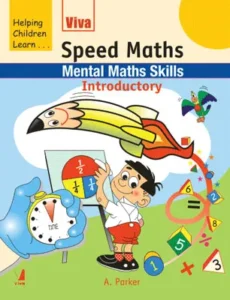
    Speed Math

    Strategy 3. Replace Passive Screen Time With Brain-Active Learning Experiences

    Indian summers mean extreme heat, and extreme heat means children spend the majority of their holiday indoors — and, inevitably, in front of screens. Screen time during summer holidays has risen dramatically with the availability of smartphones and OTT platforms, and the pattern it creates is one of the strongest accelerants of summer learning loss available. The problem is not screens in themselves — it is the specific cognitive state that hours of passive consumption produce. Reels, YouTube shorts, and passive streaming actively weaken the sustained attention, working memory, and tolerance for cognitive challenge that classroom learning requires.

    The most effective approach is not a screen ban, which creates conflict and makes devices more desirable. It is a deliberate replacement: substituting some passive screen time with summer brain activities for kids that require active cognitive engagement. When children are absorbed in building something, solving a puzzle, or conducting a kitchen experiment, they have less appetite for passive scrolling, not because it has been taken away, but because they are genuinely engaged elsewhere. Addition works better than restriction, especially during a short five-week holiday where battles over screens consume energy that could go toward more productive patterns.

    For most families, a practical starting point is to set a clear daily screen time window—for example, one to two hours per day, preferably after children have had a chance to read, play games, or do another engaging activity. Establishing screen-free hours in the morning and around mealtimes helps create a predictable structure. A simple example schedule: reading or an activity before lunch, screen time in the afternoon, and family time or games in the evening. Adjust the routine to fit your household, but keeping device use consistent each day makes it easier for everyone to follow.

    Educational games for kids are among the most efficient tools here — they deliver genuine cognitive challenge inside a format children find intrinsically motivating. Chess, Scrabble, and Ludo, as mental-scoring strategy games, all maintain the reasoning, vocabulary, and mathematical thinking that summer learning loss erodes most rapidly. DIY science experiments using kitchen materials are particularly effective for younger children: baking-soda-and-vinegar reactions, salt-and-ice experiments, and simple paper bridge-building challenges engage curiosity and systematic thinking in ways that no amount of passive video watching can replicate.

    1. Chess and strategy games
      Planning, pattern recognition, and logical reasoning in a format with deep roots in Indian culture
    2. Puzzles and logic challenges
      Lateral thinking puzzles and number grids maintain the systematic reasoning that maths requires
    3. Kitchen science
      Simple experiments with household materials build curiosity and scientific thinking cheaply.
    4. Build and make
      Origami, model-making, and construction challenges develop spatial reasoning and persistence.

    A practical reframe for Indian parents managing screen time in peak summer heat: instead of deciding what to limit, decide what to add first. When children’s time is already filled with genuinely engaging cognitive activities, passive screen use naturally occupies less space. Engagement crowds out passivity more reliably than rules do.

    Strategy 4: Keep Writing Alive Through Purposeful, Pressure-Free Practice

    Writing is the summer slide’s quietest casualty. It lacks the visible, testable quality of reading speed or times tables, so parents rarely prioritise it — and children almost never choose to practise it voluntarily during a holiday. 

    The challenge is finding writing contexts that feel purposeful rather than academic. A holiday diary that a child genuinely wants to keep, such as recording a day trip, a funny family moment, or something they cooked, maintains sentence construction and vocabulary use without a single mark or correction. A letter to a cousin or grandparent in another city, a short review of a film they watched, or a made-up story developed collaboratively over a few evenings all engage the same cognitive processes as formal answer writing, but without the performance pressure that makes children resist.

    Write Like a Pro: Fun Techniques to Improve Writing Skills for Kids

    For children who are reluctant to write, gentle encouragement can go a long way. Try making writing a shared activity: invite your child to dictate their thoughts while you write them down, or take turns adding sentences to a silly story as a family. Offer small rewards for writing, such as stickers, choosing a family treat, or the chance to read their story aloud. Celebrate any effort, however brief, and let children decide the topics that genuinely interest them. Keeping the mood light and participatory helps build confidence and breaks down resistance.

    For children who find pen-and-paper writing laborious in summer heat, typing on a phone or tablet removes the physical barrier while preserving the cognitive benefit. A short daily message, a voice note transcribed into text, or even a WhatsApp story written with care all constitute writing practice. What matters is the act of choosing words deliberately, constructing sentences for a reader, and organising thoughts with some intention — regardless of the medium.

    1. Holiday diary
      A personal record of the summer — not graded, not corrected, and entirely their own
    2. Letters to family
      Writing to a cousin, grandparent, or friend gives authentic purpose and a real audience.
    3. Collaborative story
      Taking turns adding to a shared story develops narrative thinking in an enjoyable format.
    4. Reviews and opinions
      A short review of a film, book, or meal practices structured expression naturally

    How to Spot Summer Learning Loss Before School Reopens in July

    Most parents don’t notice summer learning loss until a teacher brings it up at the first parent-teacher meeting of the new term. By that point, children have already spent two or three weeks in class, aware that they’re slower or less confident than they were in May — and that experience affects motivation and self-belief in ways that take time to recover from. Catching the signs in late June and responding with gentle, enjoyable re-engagement rather than pressure or alarm produces far better outcomes.

    What you notice
    What it signals
    Simple response
    Slower, halting reading aloud
    Reading fluency declining — word recognition slowing without daily practice
    Daily reading in any format — no testing, no correction
    Hesitation on tables they knew
    Automatic maths recall weakening from four to five weeks of disuse
    Five minutes of casual mental maths daily — keep it light and game-like
    Much shorter written sentences
    Written expression regressing to simpler, more comfortable structures
    A diary, letter, or story — low stakes, real purpose, no marks
    Very low frustration tolerance
    Cognitive stamina reduced — the brain is less accustomed to working hard
    Puzzles and strategy games that rebuild persistence gradually
    Anxiety about going back
    The child is aware of their own regression and is anticipating difficulty in July
    Reassurance first, gentle re-engagement second — never drilling

    Conclusion

    The summer holiday is more than enough time for real academic regression in reading, maths, and writing. The children who return to school in the first week of July, ready and confident, are almost never the ones whose parents arranged the most tutoring or assigned the most revision. They are the ones who read a little every night, play maths games at the dinner table, and keep their minds gently active during the break.

    The four strategies in this guide — daily child-led reading, casual maths in everyday life, active learning over passive screens, and low-stakes writing practice are all achievable without extra cost, extra pressure, or turning the holiday into a second school term.

    Frequently Asked Questions (FAQs)

    1. Can summer learning loss really happen in just five or six weeks?

    Yes. Research shows that cognitive regression in reading and maths begins within two to three weeks of disengagement from practice. The skills most affected (reading fluency, times table recall, writing confidence) are precisely the ones that depend on daily retrieval practice to stay sharp. Five weeks without that practice is enough for a measurable slide, particularly in younger children.

    Holiday homework assigned in bulk and completed under obligation is among the least effective ways to prevent summer learning loss. It is typically completed in one or two sittings rather than distributed across the holiday; it generates resistance and negative associations with learning, and it fails to address the consistency that actual skill maintenance requires. Daily low-pressure habits — twenty minutes of self-chosen reading, five minutes of mental maths in conversation — are consistently more effective.

    For reading: Tinkle, Champak, Amar Chitra Katha, and any fiction or non-fiction a child chooses freely. For maths: Kirana store estimation, Rummy, Business/Monopoly, and simple mental challenges during the day. For writing: holiday diaries, letters to relatives, and collaborative family stories. For general cognitive activity: chess, puzzles, origami, kitchen science experiments, and any construction or making challenge that holds the child’s genuine attention.

    The most effective approach is to fill the day with genuinely engaging activities before screen time becomes the default. When children have a puzzle in progress, a book they’re absorbed in, or a game they want to finish, passive screen time naturally takes up less space — not because it’s been restricted, but because they are already engaged. Setting specific screen-free windows (morning hours, mealtimes) and keeping them consistent from May rather than introducing them as holiday rules tends to work better than negotiating limits after the holiday has begun.

    Holiday homework addresses the symptom — keeping children in contact with academic content — but not the mechanism that prevents summer slide. The mechanism is consistent: small amounts of reading and maths practice distributed across every day of the holiday. Most holiday homework, however well-designed, gets completed in a few sittings and then abandoned. Treating it as a foundation to build on — by adding daily reading on top of it — is a more complete approach than relying on it alone.

    Share on:

    Written by:

    Saloni Sacheti
    Saloni Sacheti is a seasoned marketing professional with a passion for education. With a keen understanding of branding, strategy, and audience engagement, she works to create impactful educational content that resonates with learners and educators alike.

    Leave a Reply