
How to Raise Calm Kids Without Punishment: Secrets of Japanese Parenting
- Parents
- April 22, 2026
- Saloni Sacheti
Picture this: a young child is crying in a crowded train, clearly overwhelmed, but what stood out is the mother’s response. She didn’t rush to silence the child, didn’t distract or scold. She simply stayed calm and present, almost as if she trusted that the moment would pass. And it did.

For many parents watching, especially in India, where public behaviour often feels like a reflection of parenting itself, this felt unfamiliar. The instinct here is immediate—to calm, correct, or control the situation before it escalates. Which is why this raises an important question: what are they doing differently, and can it work in our homes too?
The answer is not just stricter discipline or better-behaved children by default. True difference lies in a quieter, more consistent approach to raising children—what the Japanese call Shitsuke: nurturing discipline as a habit. The focus shifts away from correcting in the moment to shaping how children think, feel, and respond over time.
When your child is upset, what do you usually do first?
Why Punishment Alone Doesn’t Build Calm Behaviour
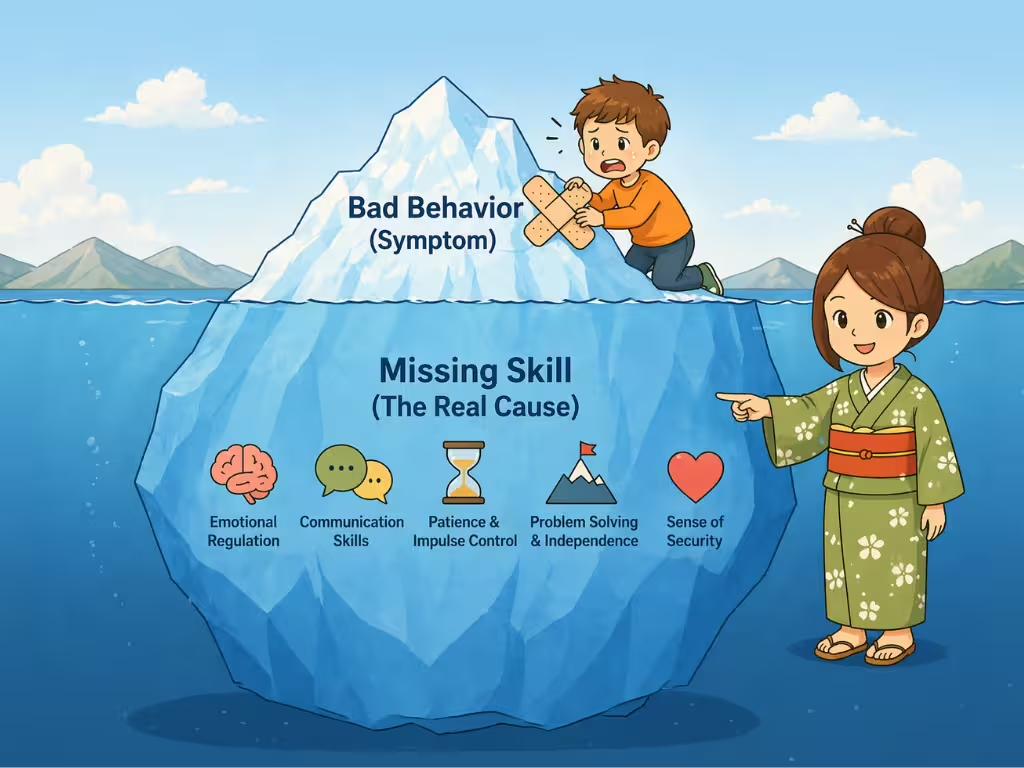
In many households, discipline tends to be reactive. A child refuses to listen, throws a tantrum, or speaks rudely, and the immediate response is to correct the behaviour. Sometimes it works in the moment, but often the same situation repeats itself in a different form.
That is because behaviour is only the surface. Underneath is often a skill the child is still developing. Instead of asking how to stop a behaviour instantly, Japanese parenting asks what the child has not yet learned—whether patience, emotional regulation, or clear self-expression.
When you begin to see behaviour this way, your response naturally slows down. You are no longer reacting to a problem; you are responding to a learning gap.
Pillars of Japanese Parenting
Mimamoru: Allowing Children the Space to Try Before Stepping In
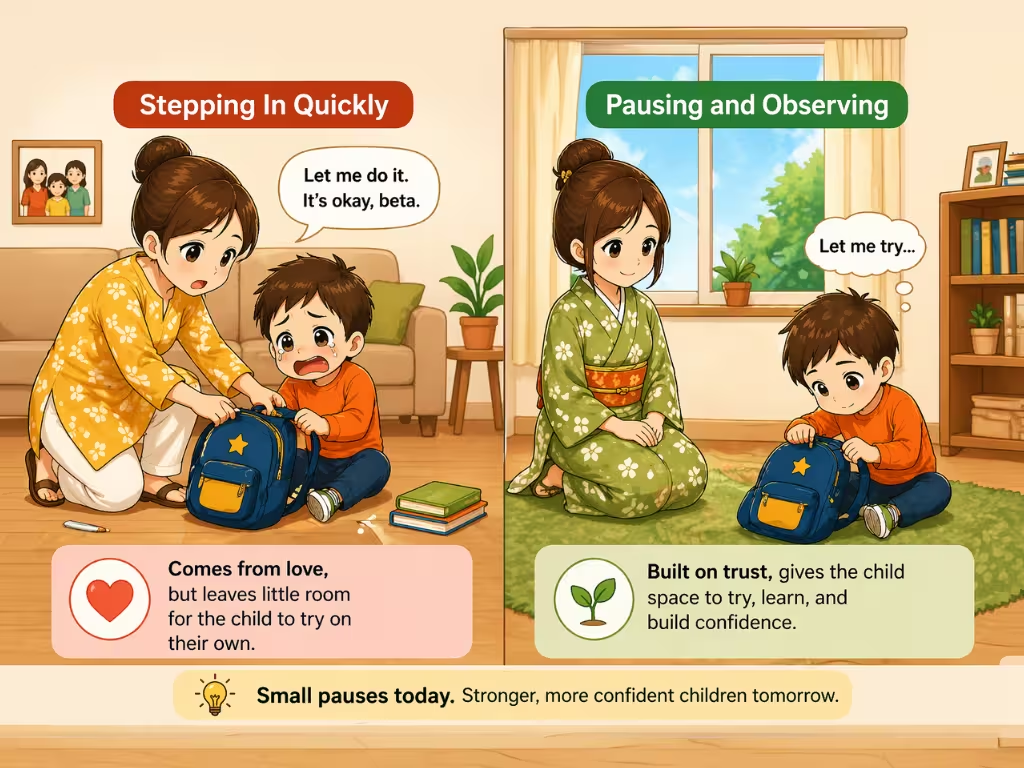
In Indian homes, especially those rooted in care and involvement, stepping in quickly is almost second nature. If a child struggles, we help. If they are upset, we soothe. If something goes wrong, we fix it. While this comes from a place of love, it often leaves very little room for children to navigate situations on their own.
Japanese parenting introduces a subtle but powerful shift here. Parents pause. They observe. They give the child a few moments to respond before intervening. This pause is not indifference; it is trust. Over time, these small moments allow children to experience difficulty, attempt solutions, and build confidence through their own efforts rather than relying on constant guidance.
Amae: Building Emotional Security Before Expecting Discipline
One reason this approach works is that it is built on a strong foundation of emotional security. Children are not expected to behave well out of fear or pressure, but from a place of feeling safe and supported.
This is where Indian families already have a natural advantage. Emotional closeness, involvement, and a strong sense of belonging are deeply embedded in our culture. However, as children grow and expectations increase, the balance can sometimes shift too quickly towards correction and performance.
What helps is maintaining that sense of connection even as you set boundaries. A child who feels understood is far more likely to respond positively to guidance than one who feels constantly judged or corrected.
Using Daily Routines to Shape Behaviour and Responsibility
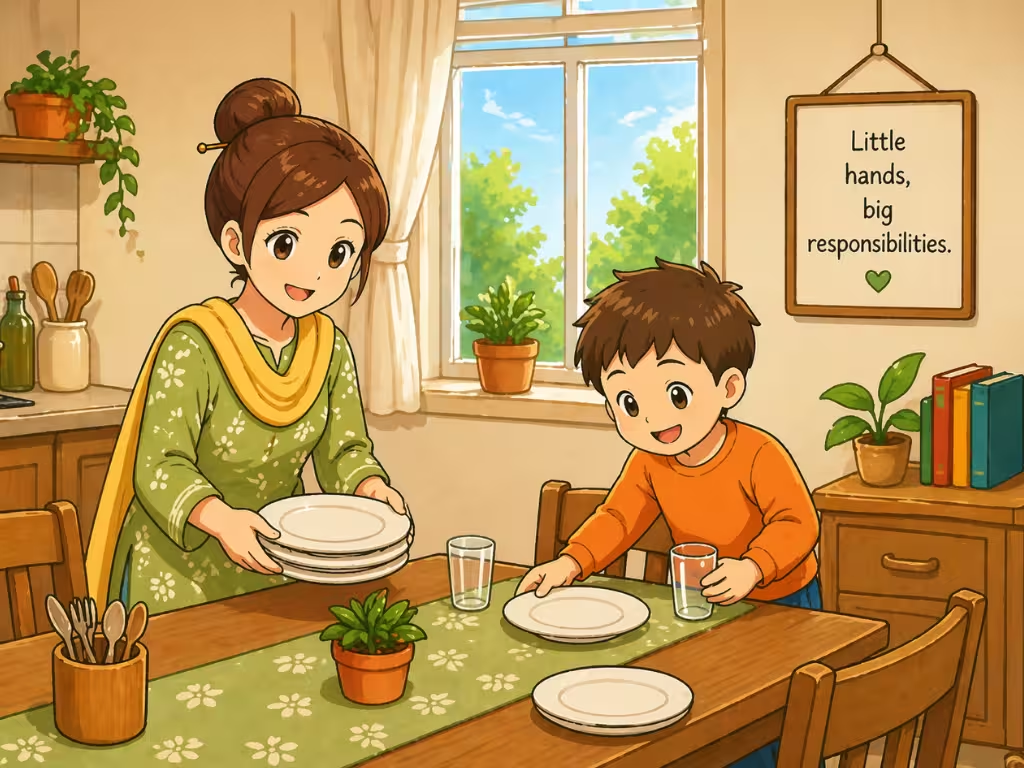
Another noticeable difference lies in how responsibility is introduced. In Japan, children are encouraged from an early age to take part in everyday tasks—not occasionally, but consistently. These are not framed as chores to be completed, but as a natural part of daily life.
Quick Action
Pick ONE small responsibility for your child this week. Repeat it daily.
This approach fits seamlessly into Indian homes. When children regularly pack school bags, help with tasks, or organise belongings, they begin to see themselves as responsible. Over time, repeated action forms identity, which drives consistent behaviour more than rules or rewards.
Focusing on Skill-Building Instead of Immediate Correction
Perhaps the most meaningful shift comes in how misbehaviour is interpreted. It is easy to label a child as stubborn, careless, or difficult in challenging moments. However, when behaviour is viewed as an indication of a missing skill, the response becomes more constructive.
For example, a child who shouts may not yet know how to express frustration calmly. A child who refuses to wait may still be developing patience. Addressing these skills takes longer than immediate correction but leads to lasting change.
A Thought to Sit With
Are we raising children who obey…
Or children who understand?
How Indian Parents Can Apply These Ideas in Everyday Life
The encouraging part is that this approach does not require a complete change. It only involves small, consistent shifts: allowing children a moment to try before stepping in, giving simple responsibilities, and focusing on what they are learning, not just on their mistakes. These steps gradually build independence and emotional balance.
Indian homes already provide a strong foundation of warmth and connection. When that is combined with a little more patience and trust, it creates an environment where children can develop self-discipline naturally rather than being forced into it.
Raising Calm, Confident Children in a Fast-Paced World
In today’s world, where children are constantly exposed to stimulation, expectations, and comparisons, emotional regulation has become more important than ever. Calm behaviour cannot be demanded; it develops over time through repeated experiences, guidance, and a sense of security.
Japanese parenting offers a valuable reminder that discipline is not just about correcting behaviour but about shaping how children understand and manage themselves. And while the cultural context may differ, the underlying principles are universal.
Small Shifts That Make a Lasting Difference
There is no single method that guarantees perfectly calm children, and that is not the goal. What matters is creating an environment where children feel secure enough to try, supported enough to learn, and trusted enough to grow.
Sometimes, the most effective change is also the simplest—pausing before reacting, allowing a child to try something on their own, or choosing to guide rather than correct immediately.
Commit to these small choices each day. Set a goal to pause, step back, or offer gentle guidance at least once daily. Reflect on how these repeated actions shape your child’s behaviour and growth over time.
Frequently Asked Questions (FAQs)
1. Can calm behaviour be taught without punishment?
Yes, calm behaviour can be developed without punishment by focusing on emotional skills, consistency, and daily habits. Children learn self-regulation over time when they feel secure and are given opportunities to manage situations independently rather than being controlled or corrected instantly.
2. What makes Japanese parenting different from Indian parenting?
Japanese parenting focuses on building habits, emotional awareness, and responsibility from an early age, rather than reacting to behaviour in the moment. Indian parenting already has a strong emotional connection, and when combined with patience and consistency, it can achieve similar outcomes.
3. How can I make my child more responsible at home?
Start with small, consistent responsibilities, such as packing their school bag, organising toys, or helping with simple household tasks. The key is repetition without pressure, as daily habits gradually shape a child’s sense of responsibility.
4. Why does my child misbehave even after being corrected?
Children often repeat behaviour because the underlying skill—such as patience, communication, or emotional control—has not yet developed. Instead of focusing only on correction, helping children learn these skills leads to more lasting change.
5. At what age should children start taking responsibility?
Children can start taking simple responsibility as early as 3–4 years old through small tasks. As they grow, these responsibilities can gradually increase, helping them build independence and confidence.
6. How can I stay calm when my child is not listening?
Pause before reacting and try to understand what the child is struggling with. Taking a moment to respond rather than react helps create a calmer environment and models emotional control for the child.
Share on:
Written by: