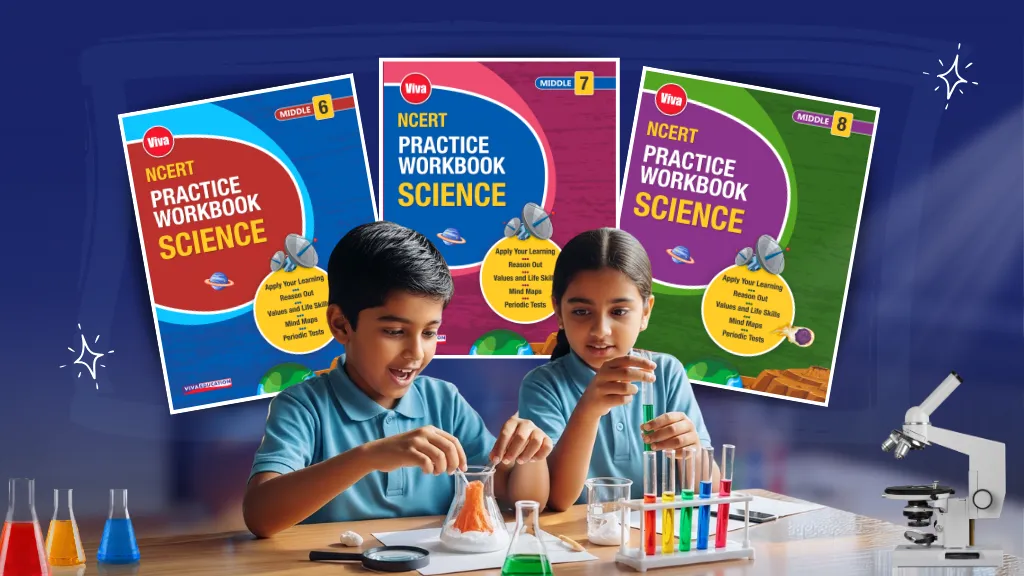
The Viva NCERT Practice Workbook Science for Classes 6–8, aligned with the NCERT Curiosity textbook, has been developed to support classroom learning through structured exercises, competency-based questions and application-oriented practice.
What makes the workbook particularly effective is that it is built around five key pedagogical approaches that align with modern science education and the goals of NEP 2020 and NCF-SE 2023.
1. Constructivist Learning: Building Understanding Through Experience
In science classrooms today, students are encouraged to construct knowledge rather than simply memorise facts.
A constructivist approach connects new concepts with learners’ prior knowledge and real-life observations. When students actively engage with ideas—through questions, examples and activities—they develop deeper conceptual clarity.
The workbook supports this approach by including:
- Concept-based questions that build on textbook ideas
- Practice exercises that encourage students to think and reason
- Activities that help learners connect scientific concepts with everyday life
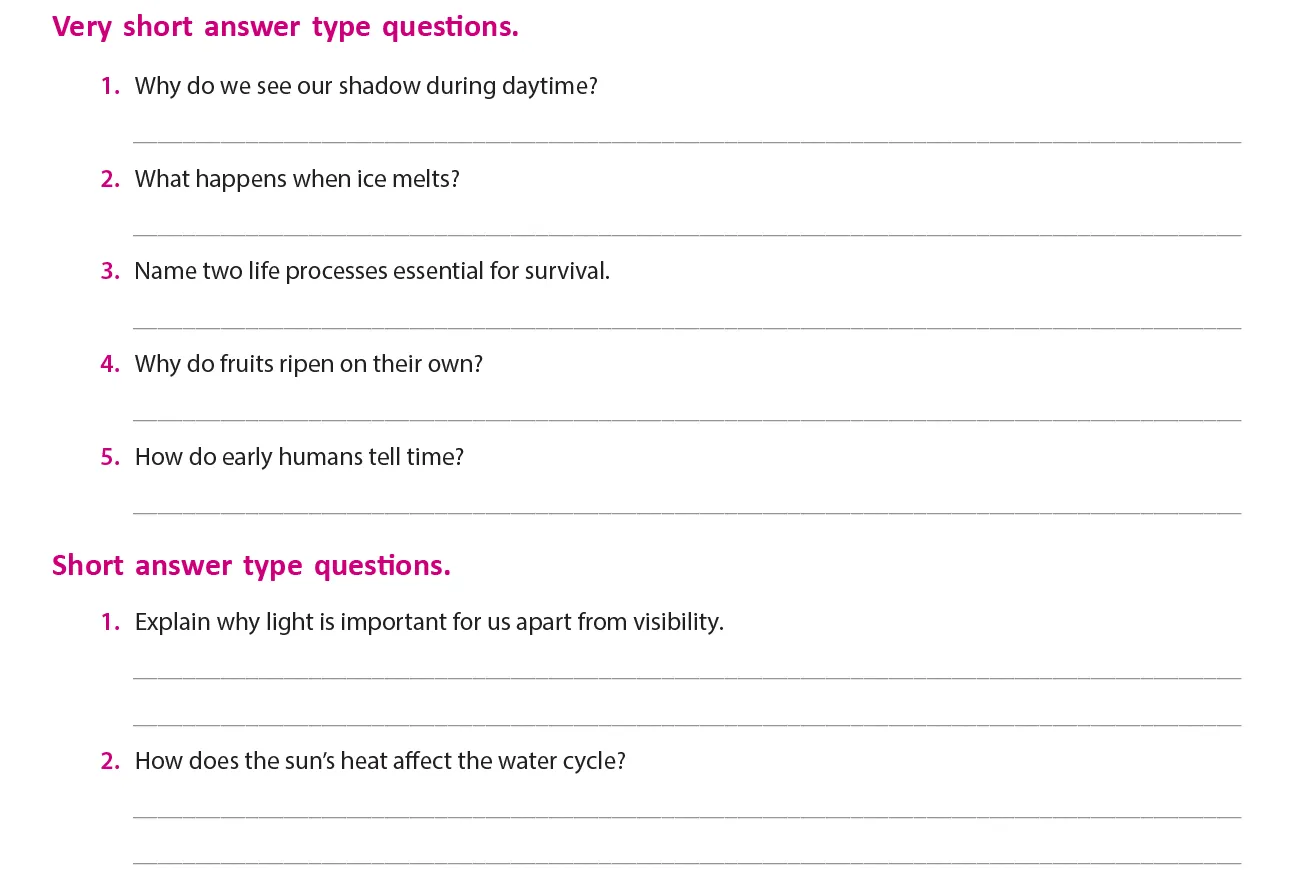
For teachers searching for practice questions for NCERT Curiosity Science, such structured exercises help reinforce classroom teaching.
2. Collaborative Learning: Encouraging Discussion and Idea-Sharing
Science learning often becomes richer when students discuss ideas, compare observations and solve problems together.
The collaborative approach promotes:
- peer learning
- classroom discussions
- collective problem-solving
Many questions in the workbook can be used as group tasks, discussion prompts or peer-learning activities, allowing teachers to integrate practice seamlessly into classroom interactions.
This makes the workbook useful not only for homework but also for interactive classroom practice and science activities.
3. Reflective Learning: Thinking About How We Learn
Reflection is an important part of meaningful learning. When students revisit concepts and analyse their responses, they develop metacognitive skills and stronger conceptual understanding.
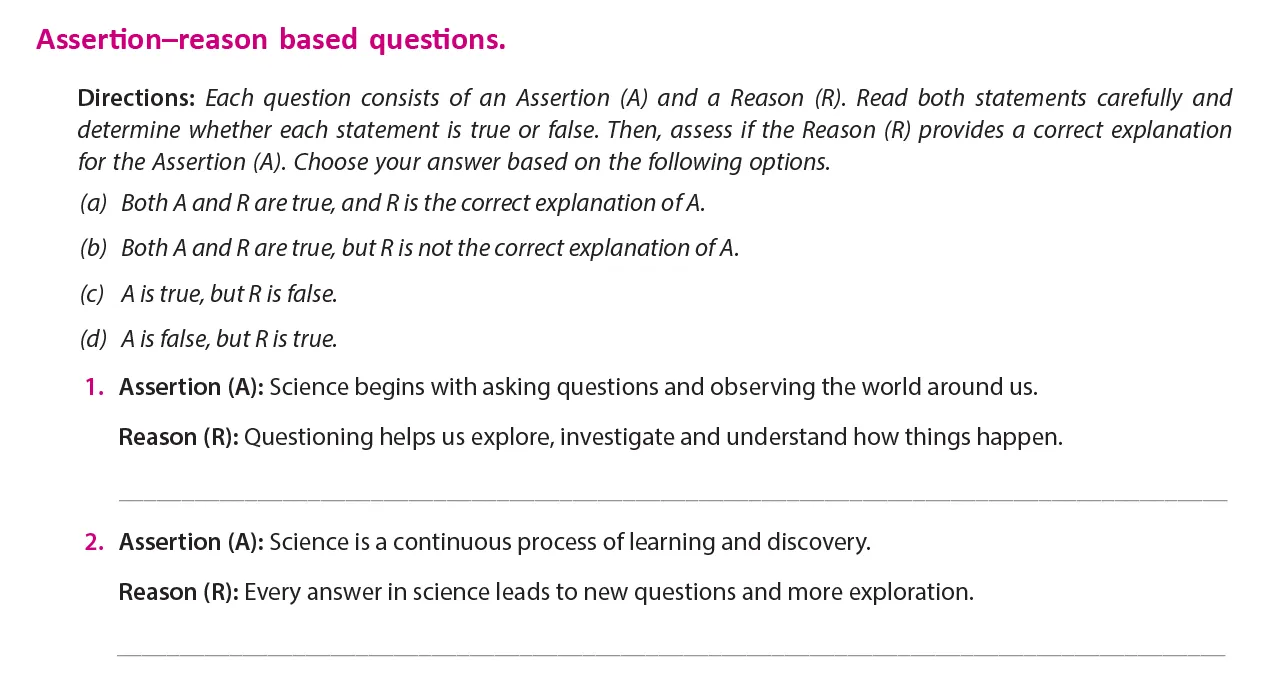
The workbook incorporates reflective elements through:
- case-based questions
- analytical prompts
- reasoning-focused exercises
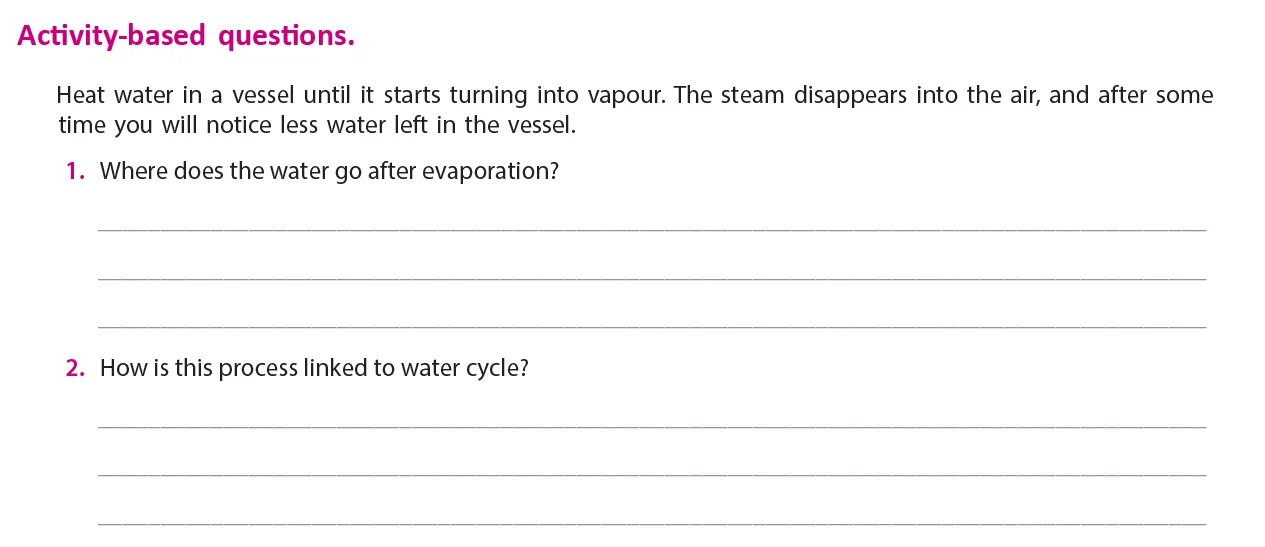
Such questions encourage students to think about why a concept works, not just what the correct answer is.
This aligns well with the growing focus on competency-based learning in CBSE science education.
4. Integrative Learning: Connecting Science with the Real World
Science does not exist in isolation. Concepts often connect with environmental issues, technology, health and everyday experiences.
An integrative approach helps students understand these relationships and apply knowledge across contexts.
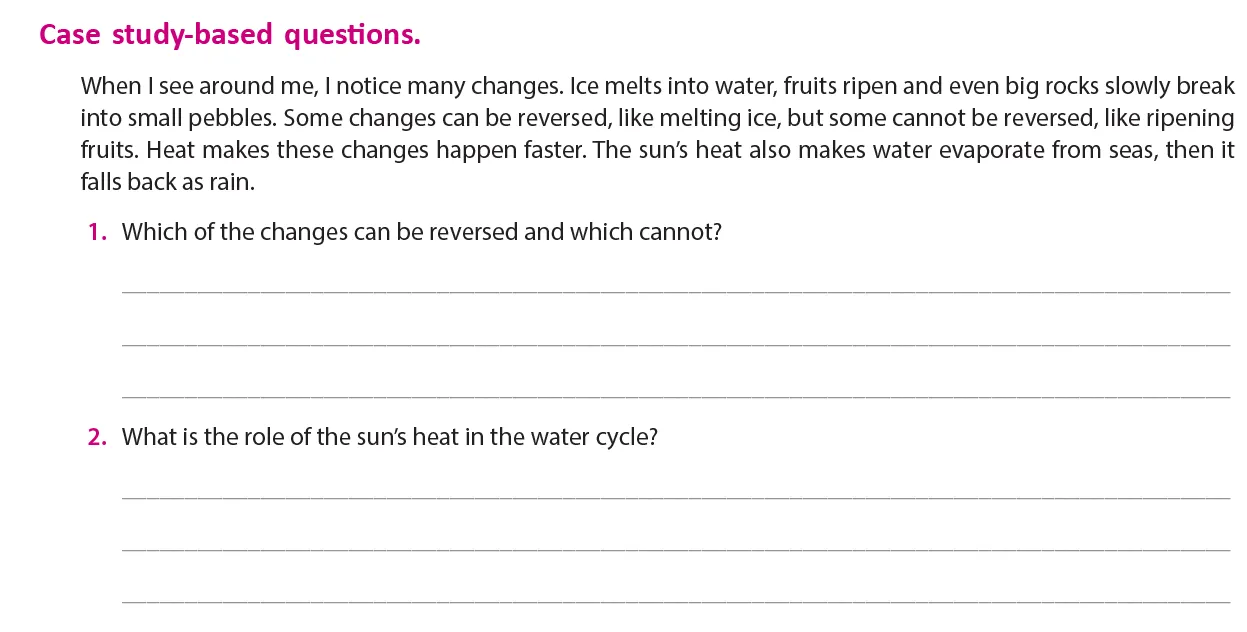
The workbook supports this by including:
- real-life examples and situations
- application-based questions
- interdisciplinary connections
For teachers and parents looking for application-based science questions for CBSE classes 6 to 8, these exercises help learners see the relevance of science in daily life.
5. Inquiry-Based Learning: Encouraging Curiosity and Investigation
The very title of the NCERT textbook—Curiosity—reflects the importance of inquiry in science learning.
Inquiry-based learning encourages students to:
- ask questions
- investigate phenomena
- analyse observations
- draw logical conclusions
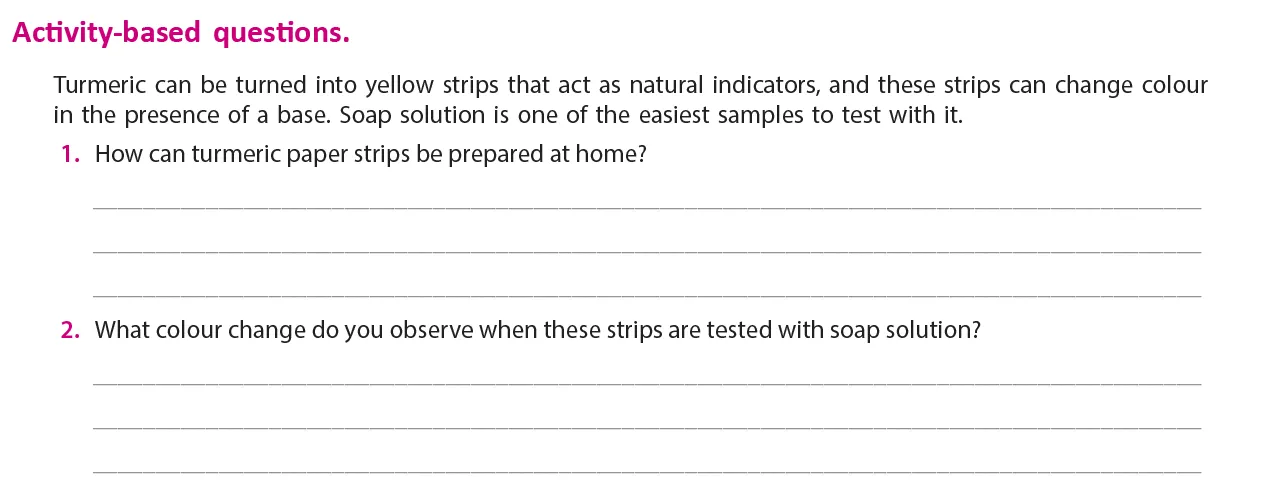
The workbook includes thoughtfully framed questions and activity-based exercises that promote exploration and problem-solving.
Such questions help students move beyond rote learning and develop the scientific temper emphasised in NEP 2020.
How the Workbook Supports Revision and Exam Preparation
Along with its strong pedagogical foundation, the workbook offers several features that make it a reliable science practice workbook for CBSE classes 6 to 8.
Some of its key strengths include:
- Chapter Snapshots that provide quick concept summaries for revision
- Complete coverage of NCERT in-text and chapter-end questions
- Competency-based questions that build conceptual clarity
- A balanced mix of objective and subjective question types
- Critical thinking and analytical questions
- Real-life and case-based applications of science concepts
- Ample writing space that encourages organised responses
This makes it an effective resource for:
- classroom practice
- homework assignments
- concept revision
- self-assessment
- examination preparation
Practice Worksheets for NCERT Curiosity Science – Class 6
Students in Class 6 begin their middle school science journey by exploring topics such as food, materials, plants, animals and the environment. To build strong conceptual foundations, regular practice through NCERT Curiosity science worksheets for Class 6 can be extremely helpful.
The Viva NCERT Practice Workbook includes:
- chapter-wise worksheets
- NCERT in-text question practice
- competency-based questions
- application-based exercises
These exercises help students revise concepts, improve answer writing and prepare confidently for assessments.
Science Practice Questions for NCERT Curiosity – Class 7
For Class 7 learners, science concepts become more analytical. Students study topics such as acids and bases, heat, motion and reproduction in plants.
Regular practice through NCERT Curiosity science practice questions for Class 7 helps learners strengthen conceptual clarity and develop scientific reasoning.
NCERT Curiosity Science Worksheets – Class 8
Class 8 science introduces more complex ideas such as force, friction, light, sound and chemical effects of electric current.
Using structured science worksheets for Class 8 allows students to revise concepts, practise competency-based questions and prepare effectively for examinations.
A Practical Companion to NCERT Curiosity
For students studying CBSE Science in Classes 6 to 8, regular practice is the bridge between understanding concepts and applying them confidently.
The Viva NCERT Practice Workbook Science for Classes 6–8 is designed to provide exactly that support. By combining structured practice, competency-based questions and inquiry-driven learning, it complements the NCERT Curiosity textbook while helping students build essential scientific skills.
For teachers, parents and students searching for NCERT Curiosity worksheets, science question banks or practice material for CBSE middle school science, such a workbook can become a valuable learning companion throughout the academic year.